Summary:
The evaluation of diversity hiring is a subjective nonscientific process. What we found is that talent acquisition mental models justify unrealistic elimination points and adversely impact diverse candidates. The talent acquisition mental models are built around the right fit, cultural fit, ability to work with the team we are interviewing for, can this person navigate the problem manager, do they have the basic skills to do the job, do we have to train them more than a more experienced candidate, will this person survive because the last person that looked like them didn’t last more than two months – whew, lots of reasons to justify not hiring diverse candidates.
Understanding Talent Acquisition Mental Models
The Oxford Dictionary defines success as The accomplishment of an aim or purpose. I like to describe it as the ability to see someone’s potential. For example, in a recent evaluation of thirty hiring funnels across multiple industries, we noted that while organizations say they want diversity in their hiring slate, they create major elimination points for diverse candidates and candidates who don’t fit their stereotypical hire.
The diversity talent acquisition question we’re asked daily, how can we improve our ability to source diverse candidates? The answer is, how many steps do you have in your hiring funnel? Where in the funnel are diverse candidates eliminated? Unfortunately, when we ask organizations to justify the number of steps in their hiring funnel and ask why candidates are eliminated within their hiring funnel, they are hard-pressed to give a specific answer that quantifies the elimination point.

The evaluation of diversity hiring is a subjective nonscientific process. What we found is that talent acquisition mental models justify unrealistic elimination points. The talent acquisition mental models are built around the right fit, cultural fit, ability to work with the team we are interviewing for, can this person navigate the problem manager, do they have the basic skills to do the job, do we have to train them more than a more experienced candidate, will this person survive because the last person that looked like them didn’t last more than two months.- whew, lots of reasons to justify not hiring diverse candidates.
These mental models not only shape the hiring manager’s view of diverse candidates it justifies the elimination of perfectly qualified individuals of color. It also serves as a bellwether to eliminate recent college graduates, individuals with limited experience, new entrants to the job market, and individuals transitioning from one profession to another.
Let’s Define Talent Acquisition Mental Models About Diverse Candidates:
Hiring managers often have mental models about diverse candidates that prevent them from getting hired. Unfortunately, these talent acquisition mental models are based on assumptions and stereotypes that don’t always hold true.
Some of the talent acquisition mental models about diverse candidates that we’ve seen include:
- Diverse candidates are not as qualified as other candidates
- Diverse candidates don’t have the right skills for the job
- Diverse candidates won’t fit in with our team
- Diverse candidates won’t be able to navigate the corporate ladder
- Diverse candidates won’t be able to survive in our company culture
These talent acquisition mental models are often based on false assumptions and stereotypes. As a result, many qualified candidates are unnecessarily eliminated from the hiring process.
If you want to improve your ability to hire diverse candidates, it’s essential to first examine your own mental models. Do you have any biases or assumptions that might be preventing you from seeing the potential in diverse candidates? Once you’ve identified these mental models, you can work on changing them. This will help you open your mind to a broader range of qualified candidates and ultimately help you build a more diverse and successful team.
Unpacking Talent Acquisition Mental Models to Improve Your Ability to Hire Diverse Candidates?
Hiring managers can improve how they hire diverse candidates by first examining their own mental models. Mental models are the mental shortcuts that we all use to make decisions. They help us simplify complex situations so that we can make quick decisions. But they can also lead us to make inaccurate decisions, especially when we’re not aware of them.
Talent acquisition mental models about diverse candidates can prevent those candidates from getting hired. For example, a mental model might be that “diverse candidates are less qualified.” This mental model can lead a hiring manager to unconsciously give preference to non-diverse candidates, even when those diverse candidates are equally or more qualified. Another mental model might be that “diverse candidates are more difficult to work with.” Again, this mental model can lead a hiring manager to avoid working with diverse candidates to help them navigate the hiring process, even when those candidates would be a good fit for the team.
Asking Powerful Questions to Evaluate Your Talent Acquisition Mental Models
If you’re a hiring manager, take a look at your mental models about diverse candidates. Are they accurate? If not, what can you do to change them?
- Do they have any biases or assumptions that might be preventing them from seeing the potential in diverse candidates?
- What shaped your mental models about diverse candidates, and how can we change that?
- Do I have any biases or assumptions that might be preventing me from seeing the potential in diverse candidates?
- When you think about diverse candidates, what is the first thing that comes to mind?
- Do you sometimes say I want the best candidate to describe diverse candidates when you don’t use the same description to describe other candidates?
Tips to Overcome Talent Acquisition Mental Models:
We know that talent acquisition mental models about diverse candidates can have a negative impact on their ability to get hired. These mental models are often based on our own personal experiences and beliefs, which can be difficult to change. By becoming aware of our mental models, we can make a conscious effort to override them when they’re inaccurate. We can also work to change our mental models by seeking out new experiences that challenge our beliefs.
We’ve found over the last ten years that there isn’t a lack of diverse talent applying for certain jobs; there is a lack of evaluation of candidate potential during the hiring process. These are all important questions to consider when trying to improve your ability to hire diverse candidates.
1. Avoid making assumptions based on stereotypes. For example, just because a candidate is from a specific ethnic or cultural background does not mean that they will or will not be familiar with certain concepts. It is vital to give all candidates a level playing field by being clear about what the job entails and what skills are required.
2. Be aware of unconscious bias. We all have biases that we are not consciously aware of, which can often come into play during the hiring process. For example, you may be more likely to hire a candidate who reminds you of yourself or who comes from a similar background. By being aware of your own biases, you can avoid unfairly favoring one candidate over another.
3. Ask questions that assess essential skills and experience. To get an accurate sense of a diverse candidate’s potential, it is important to ask questions that assess their existing skills and experience, rather than just their ability to talk about themselves. We find that managers interview diverse candidates very differently from non-diverse candidates. For example, instead of asking a candidate about their most significant achievement, you could ask them to describe a time when they had to overcome a difficult challenge.
4. Seek out diverse candidates. A lack of diversity in your candidate pool can often be the result of an insufficient recruitment strategy and brand identity. Make an effort to actively seek out qualified diverse candidates from a variety of sources, such as job fairs, professional organizations, and online job boards.
5. Be open to different types of experience. Don’t rule out a candidate because they don’t have traditional “work” experience. Many diverse candidates come from non-traditional backgrounds, and their unique experiences can often be just as valuable as more traditional work experiences.
By following these tips, you can make your mental models about diverse candidates more accurate and ultimately improve your ability to hire them.
Related Resources on Diversity Talent Acquisition:
Article: Diversity Talent Acquisition: Five Ways Hiring Process Fails Diverse Candidates
Podcast Episode: How We Fail Diverse Candidates A Micro-View of Diversity Hiring
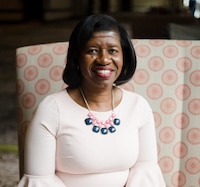
About Margaret Spence
Margaret has spent over two decades as a transformational keynote speaker, author, business strategist, and visionary. She is known for her ability to help businesses achieve their goals and create sustainable change. Her business-advisory firm specializes in human resources compliance, talent development, diversity and inclusion, and women’s leadership development. Driven by a belief that inclusion is the key to solving the greatest challenge of our time, Margaret founded The Inclusion Learning Lab to help organizations create more inclusive work environments.
Learn More About The Inclusion Learning Lab Community for DEI and Talent Leaders – Visit https://inclusionlearninglab.com/community