Navigating Bias at Work In A Contentious Landscape
A peculiar shift has occurred in a world where DEI language is under attack, rendering a once-ordinary word almost forbidden. “Bias,” a term that has long been associated with human nature’s propensity for subjective judgments, has now become a taboo utterance in certain corners of society.
Paradoxically, as laws emerge attempting to restrict its use, one undeniable truth remains: biases are an inherent part of the human experience. They reside within each of us, shape our perspectives, and influence our decisions, often without conscious awareness. To navigate this precarious landscape, we must confront the paradox of discussing biases when the very mention of the word risks offense or retribution.
In this article, we embark on a journey to explore the definition of bias at work, the reasons behind its stigmatization, and the necessity of addressing it with honesty and sensitivity to foster a more inclusive and understanding world.
Unraveling “Bias”: A Historical Perspective and Contemporary Controversy
Throughout history, the term “bias” has woven itself intricately into the fabric of human discourse, representing an undeniable aspect of our cognitive framework. From the early days of philosophical debates to the modern understanding of psychology and sociology, bias has been recognized as an inherent human tendency. However, as societal attitudes and political landscapes evolve, so does the perception of this once commonplace word.
In the wake of the dismantling of DEI (Diversity, Equity, and Inclusion) programs, particularly in states like Texas and Florida, a polarizing debate has emerged over the use of the word “bias.” and specifically using with word bias at work.
Can You Use the Word Bias at Work in DEI Training in Florida?
“The Florida Stop Woke Act, enacted in response to concerns about critical race theory and DEI (Diversity, Equity, and Inclusion) programs, aims to restrict certain forms of diversity training and education.
The Act prohibits state agencies and public employers from providing specific training that suggests one race or gender is inherently superior or inferior to another or that implies individuals bear responsibility for past actions of their race or gender. Additionally, the law restricts the use of taxpayer dollars for these training programs, effectively limiting the scope and content of DEI initiatives in public organizations.
Critics argue that this legislation stifles meaningful discussions about bias, systemic inequalities, and inclusivity, while supporters view it as a safeguard against divisive or controversial ideologies in educational settings.“
The Historical Context of Bias
We must delve into the historical context of bias, elucidates the contemporary discord surrounding its usage, and explore its definition and challenges in today’s intricate social climate.
The term “bias” refers to the inclination or tendency of individuals to favor or disfavor certain people, ideas, or groups over others based on preconceived notions, experiences, or cultural influences. It plays a significant role in shaping human perceptions and judgments, acting as a mental shortcut that helps individuals quickly process vast amounts of information.
However, biases can emerge from various sources, including personal beliefs, societal norms, and media portrayals, leading to decision-making distortions and discriminatory practices. Biases can manifest on both conscious and unconscious levels, with some being readily apparent and others operating subtly beneath the surface of awareness. Conscious biases are those we are aware of and can actively control, while unconscious biases are automatic and often stem from implicit associations formed over time.
Acknowledging and confronting biases is fundamental to promoting a fair and inclusive society. By recognizing the existence of biases within ourselves and others, we begin to dismantle the barriers that hinder empathy, understanding, and equitable treatment. Embracing this self-awareness empowers individuals to challenge their own prejudices and fosters a culture of open dialogue and learning.
When biases are acknowledged, individuals can work to minimize their impact on decision-making processes, thereby promoting fairer treatment and more inclusive environments in various aspects of life, including education, employment, and social interactions. By understanding the significance of acknowledging biases, we take a crucial stride towards building a more just and harmonious society where differences are celebrated rather than used as a basis for discrimination.
Top Ten Biases at Work Unveiled:
Understanding the Forces That Shape Our Perceptions
- Confirmation Bias: The tendency to favor information that confirms one’s existing beliefs while disregarding contradictory evidence.
- Implicit Bias: Unconscious attitudes and stereotypes that influence behavior and perceptions towards certain groups or individuals.
- Gender Bias: Preconceived notions and prejudices based on gender, leading to differential treatment of males and females.
- Racial Bias: Discrimination or unfair treatment towards people of different racial or ethnic backgrounds.
- Age Bias: Stereotyping or showing preferential treatment based on a person’s age, often leading to ageism.
- Halo Effect: Forming a positive impression of a person based on one favorable trait, leading to a biased overall perception.
- Beauty or Body Size Bias: The tendency to favor individuals perceived as physically attractive, influencing social interactions and opportunities.
- Affinity Bias: Preferring people who share similar backgrounds, experiences, or interests, which can hinder diversity and inclusivity.
- Attribution Bias: Attributing successes to internal factors and failures to external factors impacting how individuals perceive their own and others’ achievements.
- In-group Bias: Favoring members of one’s own social, cultural, or professional group over outsiders, leading to favoritism and exclusion of others.
Other Articles You Might Like:
- 6 Proven Ways Managers Leverage Cultural Diversity to Build Connected Teams
- The Compelling Path to Inclusive Team Effectiveness
- Podcast: How Women (and Everyone) Can Form Deeper Bonds to Fight Bias at Work (HBR.org)
Understanding Bias in DEI: Unveiling the Forces Fostering Discourse
The once-innocuous term “bias” has been entangled in an increasingly intricate web of taboos, and unraveling the reasons behind this shift is imperative to comprehend the evolving social dynamics. The growing stigma surrounding the word can be attributed to several factors, including heightened polarization in society, intensified political debates, and the emergence of divisive narratives.
Moreover, dismantling DEI programs in certain states, like Texas and Florida, has further fueled the controversy surrounding bias. As these programs are intended to promote Diversity, Equity, and Inclusion, their dissolution has raised concerns about the commitment to addressing systemic inequalities. Consequently, the political and social implications of such actions have provoked debates about the appropriateness of using the term “bias” in public discourse.
Within workplaces, the impact of this taboo on employee interactions cannot be underestimated. Fear of retribution or offense has deterred open conversations about bias, hindering the development of inclusive environments where diverse perspectives can be valued and understood. Employers are will to avoid using the word bias to avoid litigation or complaints from employees. That may serve one population, but what does it say to everyone else?
Redefining Discourse: Paving the Way for Inclusive Communication on Bias at Work
As organizations grapple with this delicate balance between language regulation and fostering open dialogue, navigating the taboo around bias becomes a paramount challenge in building more equitable workplaces and societies.
In the wake of the controversy surrounding the term “bias,” finding alternative language to address similar concepts has become an essential endeavor. A diverse array of expressions, such as “unconscious preferences,” “implicit associations,” or “preconceived notions,” can be explored to convey similar meanings without invoking the same level of backlash.
However, in this quest for alternative language, it is crucial to weigh the pros and cons carefully. While new terminology may help mitigate immediate resistance, it could also inadvertently dilute the gravity of the issue at hand. Thus, a delicate balance must be struck to ensure that the essence of the message remains intact while adapting the language to suit the context.
This calls for an open dialogue and a collaborative effort to establish a shared vocabulary that respects the sensitivities of diverse perspectives and upholds the commitment to addressing biases and promoting inclusivity. By thoughtfully navigating the intricacies of language, we can create a more constructive and respectful platform for discussing biases and advancing toward a more equitable and understanding society.
10 Alternative Words Instead of Bias at Work
Here are 10 alternative words that can substitute for the word bias at work.
- Prejudice: The jury’s decision may have been influenced by the jurors’ personal prejudices, leading to an unfair verdict.
- Stereotype: We should avoid making assumptions based on stereotypes and instead approach each individual with an open mind.
- Partiality: The manager’s partiality towards certain team members impacted promotion decisions within the organization.
- Predisposition: Due to his past negative experiences, John was predisposed to distrust authority figures.
- Preference: The committee members expressed their preferences when selecting a homogenous candidate for the job.
- Inclination: The manager’s natural inclination towards hiring a man in the science department continued the trend of leaving women out of consideration for the job.
- Tendency: A recurring tendency to favor individuals from the same background can hinder diversity in hiring practices.
- Assumption: Making an assumption without considering all the facts can lead to errors in judgment.
- Propensity: The team leader noticed a propensity among team members to avoid taking risks in their decision-making.
- Leanings: The politician’s political leanings strongly influenced their stance on diversity and inclusion policies.
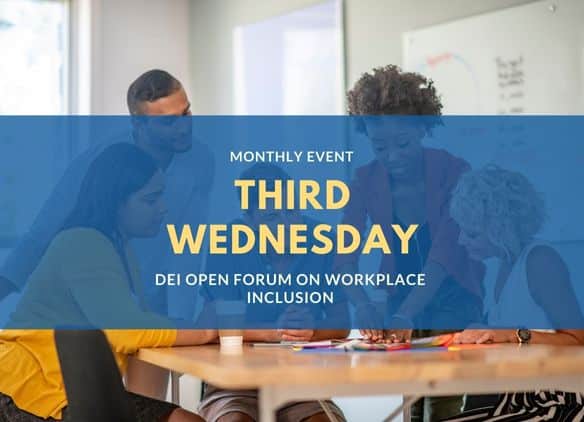
Join Us Every
Third Wednesday for Our Open Forum
The Taboo of Using The Word Bias at Work…While Bias Remains Undeniable.
In the ever-changing landscape of language and societal dynamics, the question looms large: can we still use the word “bias at work”? While the term has become entangled in a growing web of taboos and faces challenges in the legal context, its significance remains undeniable.
Recognizing conscious or unconscious biases fosters empathy, understanding, and inclusivity. Avoiding the word altogether may temporarily sidestep potential conflicts but cannot erase the underlying issues that bias perpetuates. Instead, we must embrace transparency, education, and open dialogue to sensitively and legally navigate the complexities surrounding bias.
Rather than succumbing to the limitations imposed by a divisive debate, we should strive for a shared understanding and language that reflects our commitment to growth and progress. Acknowledging biases and their impact creates opportunities to challenge and dismantle discriminatory practices.
Embracing a nuanced approach to language, where we carefully choose alternative expressions while preserving the essence of the message, can bridge divides and pave the way for more inclusive communication.
In conclusion, while the word “bias” may evoke discomfort in some circles, it remains an essential component of addressing human nature’s inherent tendencies. By acknowledging its existence and exploring alternative words thoughtfully, we must transcend the divisive barriers and continue to foster a society that embraces diversity, equity, and inclusion.
The journey towards building a more equitable world demands that we confront biases head-on, daring to navigate the intricacies of language while staying true to our commitment to promote fairness and understanding.
Watch Episode 38: The Fight For Diversity Intensifies
Inclusion Unscripted Live Podcast on YouTube, LinkedIn, and Facebook Every Friday at 2 pm EST – Join us on LinkedIn – or download on your favorite Podcast App